A modern AI-powered video management software (VMS) should include real-time object and person detection, predictive analytics for anomaly forecasting, generative AI-powered search and incident reporting, multi-camera cloud management, facial recognition access control, automated alerting, license plate recognition, video analytics dashboards, edge processing for low-latency response, and custom integration with your existing business systems. Without these, you’re not running a video management system — you’re just recording footage.
Most “video management software” on the market today is still just glorified digital recording: cameras feed into a server, footage gets stored, and a human has to manually scrub through hours of video after something goes wrong. That’s not intelligence — that’s a filing cabinet with a lens.
A genuinely AI-powered VMS flips that model. It doesn’t just store what happened — it understands what’s happening, predicts what’s likely to happen next, and tells you in plain language. Here are the 10 features that actually separate a modern, AI-driven video management system from a traditional CCTV setup.
1. Real-Time Object & Person Detection
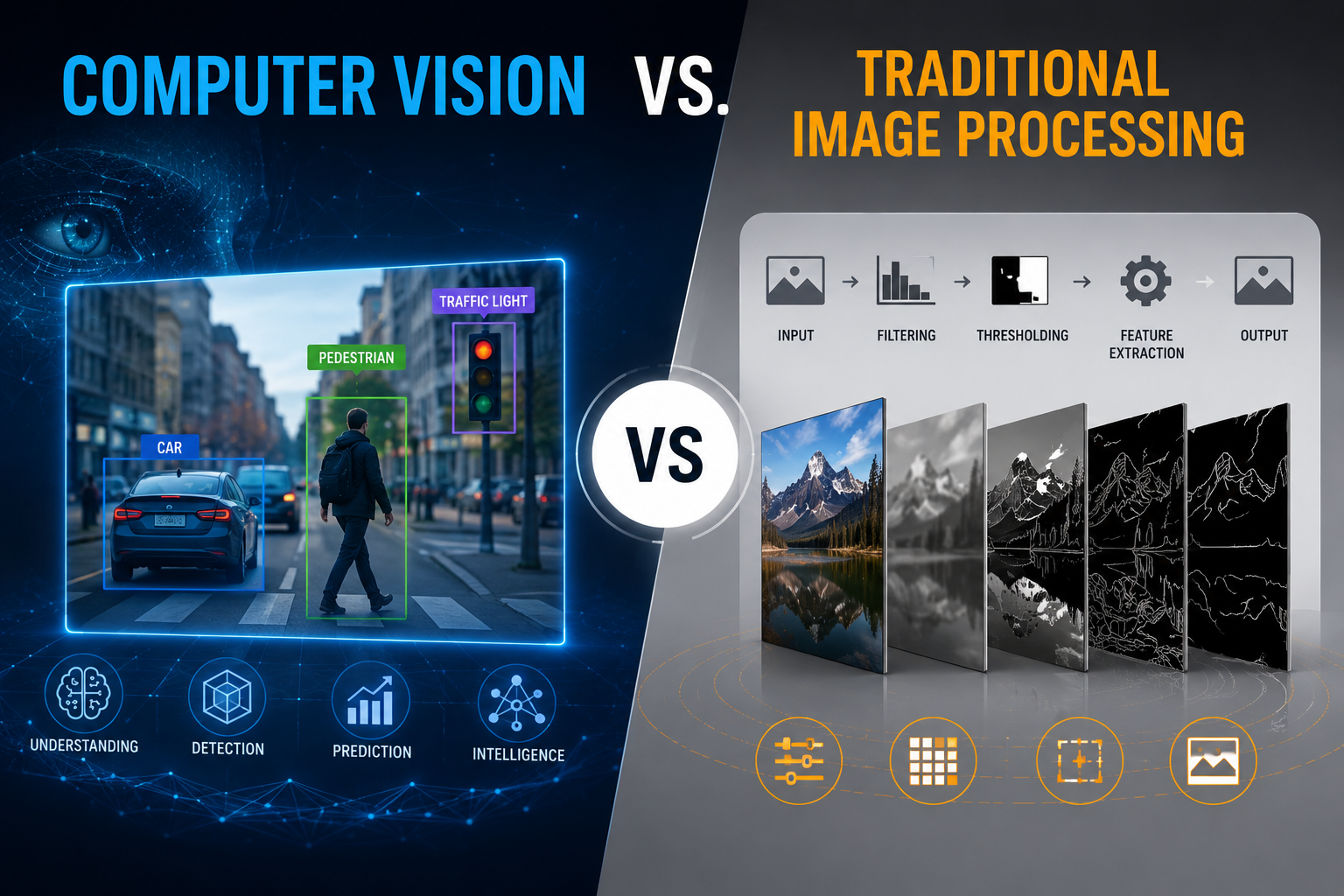
The foundation of any AI VMS is computer vision that can identify people, vehicles, and objects in a live video feed — not after the fact. This means the system flags an unauthorized person in a restricted zone, a vehicle in a no-parking area, or an unattended bag the moment it happens, rather than surfacing it during a post-incident review.
2. Predictive Analytics for Anomaly Forecasting
This is where most video management software falls short. Real-time detection tells you what’s happening right now — predictive analytics tells you what’s likely to happen next. By analyzing historical footage patterns (foot traffic spikes, recurring loitering times, seasonal crowd behavior), a predictive-analytics-enabled VMS can flag rising risk before an incident occurs, rather than just reacting once it does. For retail, this might mean forecasting theft-prone hours; for logistics facilities, predicting when unauthorized access attempts are most likely to spike.
3. Generative AI-Powered Video Search & Reporting
Scrubbing through 12 hours of footage to find “the guy in the red jacket near the loading dock at 3pm” used to take an analyst most of an afternoon. Generative AI changes that entirely. A modern VMS should let you type a natural-language query — “show me anyone loitering near the entrance after 10pm this week” — and get instant, relevant clips. Beyond search, generative AI can auto-draft incident reports, summarizing what a camera captured in plain English instead of forcing a security team to write it up manually.
4. Multi-Camera, Multi-Site Cloud Management
Whether you’re managing 5 cameras or 5,000 across multiple locations, a real VMS should centralize everything into a single cloud dashboard. This means unified access control, one login for every site, and the ability to compare activity across locations — critical for retail chains, logistics hubs, and multi-branch enterprises.
5. Facial Recognition & Biometric Access Control
For secure facilities, facial recognition isn’t a novelty — it’s frictionless access control. A modern VMS should be able to verify identity in real time, flag known persons of interest, and integrate directly with door/gate access systems, removing the need for badges or manual check-ins at sensitive entry points.
6. Automated, Context-Aware Alerting
Alert fatigue is one of the biggest reasons traditional CCTV systems fail in practice — too many false alarms, and teams start ignoring them. AI-driven alerting should be context-aware: a person walking past a warehouse at 2pm isn’t the same risk as the same event at 2am. The system should learn context and only escalate alerts that actually matter.
7. License Plate Recognition (LPR)
For logistics, parking management, and perimeter security, automatic license plate recognition is essential. A capable VMS should log every vehicle entering or exiting a site, cross-reference against watchlists or authorized-vehicle databases, and trigger alerts on unrecognized plates automatically.
8. Video Analytics Dashboards
Raw footage isn’t a management tool — data is. A strong VMS converts video streams into structured analytics: foot traffic heatmaps, dwell-time reports, peak-hour breakdowns, and incident trend lines over weeks or months. This turns your security cameras into a genuine business intelligence source, not just a liability-coverage tool.
9. Edge Processing for Low-Latency Response
Sending every video frame to the cloud for analysis introduces delay — and delay defeats the purpose of real-time detection. The best AI VMS platforms process video at the edge (on-device or on local servers) for instant detection, then sync summarized data to the cloud for storage and reporting. This keeps response times near-instant even with unreliable internet connections.
10. Custom Integration With Your Existing Systems
This is the feature most off-the-shelf VMS platforms simply can’t deliver. Every business runs different software — ERP systems, access control platforms, alarm systems, POS software, HR tools. A truly effective video management system needs to plug into what you already run, not force you to rebuild your operations around it. This is exactly where custom software development matters: rather than adapting your business to a rigid, one-size-fits-all VMS, a custom-built system is engineered around your specific cameras, sites, workflows, and existing tech stack from day one.

Off-the-Shelf VMS vs. Custom AI-Powered VMS
| Capability | Off-the-Shelf VMS | Custom AI-Powered VMS |
|---|---|---|
| Object/person detection | Often basic, generic models | Trained on your specific environment |
| Predictive analytics | Rarely included | Built around your actual risk patterns |
| Natural-language search | Not available | Generative AI search & auto-reporting |
| System integrations | Limited or none | Built to connect with your existing tools |
| Scalability | Capped by vendor licensing | Scales with your business, no artificial limits |
| Ownership | You rent the platform | You own the system outright |
Why These Features Matter Together, Not Separately
None of these ten features work well in isolation. Real-time detection without predictive analytics means you’re still only reacting. Predictive analytics without generative AI search means your team still has to manually interpret every flagged anomaly. And none of it matters if the system can’t integrate with the tools your business already runs.
That’s the real difference between “video management software” as a category and an actual AI-powered security system: the first records and reacts, the second understands, forecasts, explains, and adapts to your operations specifically.
Final Takeaway
If your current CCTV system only lets you rewind and watch, it isn’t a video management system in the 2026 sense — it’s a recorder. A genuinely AI-powered VMS combines real-time computer vision, predictive analytics that anticipates risk before it happens, generative AI that turns hours of footage into instant answers, and — critically — custom software development that makes the whole system fit your business instead of the other way around.
Deutics builds AI-driven video management and surveillance systems from the ground up, combining predictive analytics, generative AI solutions, and custom software development into one cohesive platform tailored to your cameras, sites, and existing systems — not a rigid template you have to adapt to.
Frequently Asked Questions
1. What is AI-powered video management software? AI-powered video management software (VMS) is a system that goes beyond recording footage — it uses computer vision, predictive analytics, and generative AI to detect events in real time, forecast potential risks, and generate instant, searchable insights from video data.
2. How is an AI VMS different from traditional CCTV? Traditional CCTV simply records and stores footage for manual review after an incident occurs. An AI VMS actively analyzes video in real time, predicts anomalies before they escalate, and lets users search footage using natural language instead of manually scrubbing through hours of recordings.
3. Can video management software integrate with my existing business systems? Yes, but usually only if it’s custom-built. Most off-the-shelf VMS platforms have limited integration options. A custom-developed VMS can connect directly to your ERP, access control, alarm, and POS systems for a unified security and operations workflow.
4. What role does predictive analytics play in video surveillance? Predictive analytics analyzes historical video and activity patterns to forecast when and where incidents are more likely to occur, such as theft-prone hours or recurring unauthorized access attempts, allowing security teams to act proactively rather than reactively.
5. Is a custom AI video management system worth it compared to off-the-shelf software? For businesses with specific security needs, multiple sites, or existing software systems that need integration, a custom AI VMS typically delivers better long-term value. It removes vendor licensing caps, is trained on your actual environment, and scales alongside your business rather than forcing your operations to fit a generic platform.